Wedge loft guide: pitching, gap, sand, and lob — which degrees you need.
Pitching 44–48°, gap 50–52°, sand 54–56°, lob 58–62°. Here's what each wedge does, how many to carry, and how to space the lofts.

What golf wedges actually do.
Wedges are the highest-lofted clubs in your bag. They live in the 44° to 62° range and they handle every shot from roughly 120 yards in to the hole — full swings on approach, half swings and pitches around the green, splash shots out of bunkers, and the occasional flop when you've short-sided yourself. The rest of your bag is built for distance. Your wedges are built for control.
The number on the bottom of the head is the loft. The loft is what makes a wedge a wedge. A pitching wedge is the lowest-lofted wedge most golfers carry; a lob wedge is the highest. Between those two ends, the wedges in your bag should be spaced 4–6° apart so each one has its own job and its own yardage.
Standard wedge lofts at a glance.
| Wedge | Abbrev. | Loft range | What it does |
|---|---|---|---|
| Pitching wedge | PW | 44–48° | Full-swing approach shots and bump-and-run chips. |
| Gap wedge | GW | 50–52° | Fills the yardage gap between your PW and SW. |
| Sand wedge | SW | 54–56° | Bunker shots, soft pitches, controlled approach play. |
| Lob wedge | LW | 58–62° | Flops, short-sided saves, shots that need to stop fast. |
You can stop reading right here and have most of what you need: every wedge does a different job, spaced by loft, and you build a setup that covers your scoring distances without leaving holes. The rest of this article walks the lofts one by one, explains why loft changes how the ball flies, and helps you decide how many you actually need.
The four wedge types, walked one by one.
Most modern wedge lineups break into four families. You won't carry all four — most golfers carry two or three. But you should know what each one does so the math behind your setup makes sense.
Pitching wedge (PW) · 44–48°
The pitching wedge is the lowest-lofted wedge and the only one that ships standard inside an iron set. It's what you reach for on a full-swing approach when a 9-iron would fly too far. It's also a reliable club for low, running chips — the bump-and-run shot off the fringe.
Lofts have crept stronger over the last decade. A modern PW that says 44° on the bottom plays more like an old 42°. That matters because it changes how much gap you have to fill before your sand wedge.
Gap wedge (GW) · 50–52°
The gap wedge exists for one reason: to fill the distance between your pitching wedge and your sand wedge. Without it, you've got a 25-yard gap that you'd otherwise cover by swinging the PW soft or the SW hard. Neither works consistently. A 52° gap wedge handles full swings from 80–105 yards and three-quarter pitches from 60–75. It's the wedge that gets used most often once it's in the bag.
Sand wedge (SW) · 54–56°
The sand wedge was designed for bunkers — a higher loft and wider sole that let the head glide through sand instead of digging in. It also handles standard pitches from the fairway when you need the ball to land soft and stop. Most golfers in their first or second year carry just a PW and a SW and cover most of the yardages they face. It's the most common "first dedicated wedge" purchase.
Lob wedge (LW) · 58–62°
The lob wedge is the highest-lofted club most golfers carry. It launches the ball high with a steep descent, so the ball lands soft and stops fast. That's exactly what you want on a short-sided pitch, a flop over a bunker, or any time the green slopes away from you. It's also the wedge that takes the most practice — too much loft makes solid contact unforgiving. Most beginners do better skipping the 60 until their short game is steady.
How loft changes distance and how the ball stops.
Loft is the only spec that matters across wedges, and it controls three things: how far the ball flies, how high it goes, and how fast it stops once it lands.
As loft increases, distance drops and trajectory rises. A 52° wedge on a full swing goes 15–25 yards farther than a 60° wedge for the same swing speed. The 60° flies higher, comes down steeper, and stops within a few feet of where it lands. The 52° rolls out more — useful when you want the ball to release toward a back pin, less useful when there's a bunker between you and the green.
Spin matters more than most amateurs think. Higher-lofted wedges generate more backspin because the face has more time to grip the ball through impact. That spin is what stops a wedge shot on a firm green. It's also why wedge grooves matter — clean, sharp grooves grip the cover of the ball; packed, worn grooves don't. See the wedge distance chart for typical full-swing yardages by loft and skill level.
The practical takeaway: don't try to muscle a 56° into doing a 52°'s job. Build the gaps into the setup and let each wedge do what its loft was designed for. A wedge swung at 80% with the right loft is more predictable than the same wedge swung at 100% trying to cover a yardage it's not built for.
How many wedges should you carry?
Two if you're starting. Three if you play regularly. Four if you're a tournament player or you've got tight gap discipline. More than four is almost always a mistake — you've traded a long iron or a hybrid you actually need.
Beginners — PW + SW (two wedges)
If you're new to the game, keep it simple. The pitching wedge from your iron set plus a 56° sand wedge covers full-swing approaches in the 90–120-yard range, pitches and chips from around the green, and most of your bunker shots. Two wedges, two distinct jobs, fewer decisions to make over the ball.
Most amateurs — PW + GW + SW (three wedges)
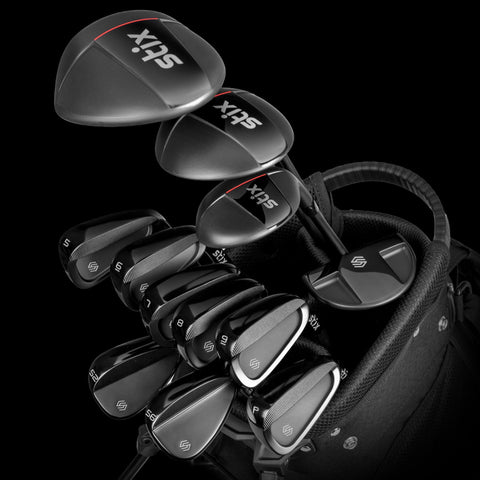
Once you're playing enough to notice your full-swing distances, add a 52° gap wedge between the PW and SW. That gives you three full-swing yardages in clean 15-yard increments and lets you stop swinging the PW soft or the SW hard to cover in-between distances. The 52/56 pair is the most common Stix setup — both ship matched inside the P02 Perform 12 set and as part of the Compete Wedge Set.
Serious players — PW + GW + SW + LW (four wedges)
The four-wedge bag adds a 60° lob to the PW/52/56 lineup. Tournament players carry this configuration because it covers the short-sided pitch and the flop that a 56° can't fake. You're trading a long iron or a hybrid for the fourth wedge, so this only pays off if you're confident with the 60. If you're not, skip it — a 56° in the right hands handles most of what a 60° handles, with less risk.
How to pick the right wedge setup for your game.
Three decisions, in order: how many wedges, what lofts, what construction.
Start with your pitching wedge's loft.
Look at the bottom of your PW. If it says 44°, your sand wedge should be 54° to keep the gaps even, and you'll want a 50° gap wedge between them. If your PW is 46°, a 52° gap and a 56° sand work cleanly. The rule is 4–6° between wedges. Skip that and you'll find yourself making half swings to cover distances your setup left empty.
Pick the highest wedge you can actually use.
A 60° lob wedge is the most-tempting and most-misused club in golf. It looks like an answer to short-sided pitches, and it is — if you can swing it. If your contact isn't already steady from inside 50 yards, a 60° will produce more bladed shots than soft landings. Forgiveness in a wedge is real, but technique outweighs it on the high-lofted end. Most golfers do better with a 56° as their top wedge until the short game is repeatable.
Match the construction across the set.
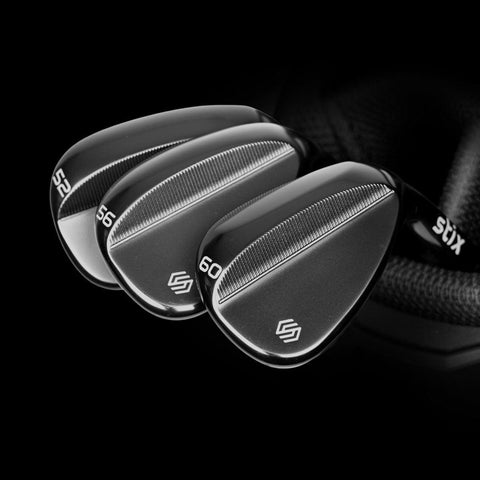
Carrying three wedges that look and feel different at address is a tax on your decision-making. Matched wedges read the same at setup. Same head shape, same finish, same shaft. You stop comparing clubs at address and start picking the shot. The Stix Compete Wedge Set ships the 52, 56, and 60 with milled faces, two loft-specific sole grinds (full sole on the 52, double sole on the 56 and 60), and the same chrome or PVD black finish across all three. Three clubs, one system.
Distance control on a wedge isn't a swing-harder question. It's a pick-the-right-loft question. The bag setup does the work.
Frequently asked questions
What is a 52 degree wedge?
What loft is a sand wedge?
How many wedges should I carry?
What degrees should my wedges be?
Do beginners need a lob wedge?
What's the difference between a 56° and a 58° wedge?
Related Stix sets — built around the configurations described in this article.